The Physics of Countersteering: Why Pushing Left Turns You Left
The Counterintuitive Reality of Two Wheels
Motorcycle steering appears to defy common sense. To turn left at normal road speed, you apply a light forward push to the left handlebar. The front wheel briefly points to the right, the motorcycle begins to lean left, and the steering then settles into the left-hand curve. The same principle applies in the opposite direction: press the right bar and the motorcycle leans and turns right. This is countersteering, and it is the physical action that initiates a motorcycle turn above walking pace.
Every rider already uses countersteering, even if the movement is unconscious. A small pressure from the hands is enough to alter the motorcycle”s balance, so the machine can change direction quickly and naturally. Understanding that process matters because an unexpected bend, tightening radius or road hazard can trigger a stiff-arm survival reaction. A conscious, gentle bar input gives you a more precise alternative. It allows you to choose the line, manage the lean and make mid-corner adjustments without fighting the motorcycle.
The Physics Beneath Your Tyres
When you push the left handlebar, the front wheel initially steers slightly to the right. That may seem to send the motorcycle away from the intended corner, but this short movement shifts the tyre contact patches in relation to the combined centre of gravity of the rider and machine. The wheels are effectively steered out from underneath the mass they are supporting. Once that support moves sideways, the motorcycle begins to fall, or lean, to the left.
The motorcycle does not remain pointed to the right. As the left lean develops, the steering geometry and the rider”s input bring the front wheel around to follow the left-hand path. The amount of pressure required is usually very small, particularly on a well-set-up motorcycle. The aim is not to twist the bars aggressively, but to create the controlled imbalance needed to establish the chosen lean angle. Countersteering therefore separates the physical input from the visible result: the hand pushes one way, while the motorcycle turns the other.
| Rider input | Mechanical reaction | Practical result |
|---|---|---|
| Forward pressure on the left bar | Front wheel briefly steers right | Motorcycle leans left |
| Forward pressure on the right bar | Front wheel briefly steers left | Motorcycle leans right |
| Reduced pressure and stable throttle | Steering settles with the curve | Motorcycle holds its line |
| Gentle opposite input | Lean angle reduces or changes | Motorcycle adjusts or exits the turn |
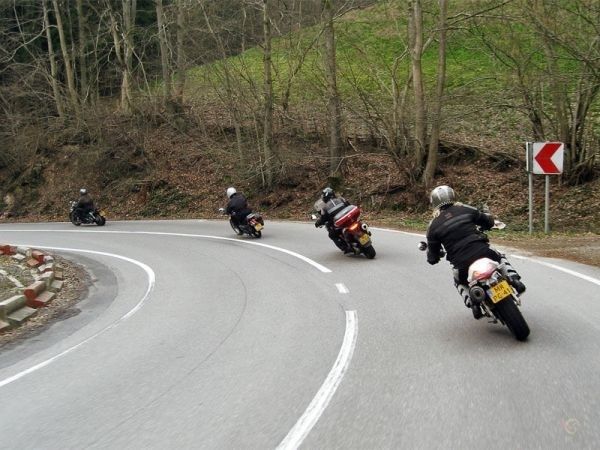
Several forces then help sustain the turn. Gyroscopic precession in the rotating wheels contributes to the way steering inputs create a lean response, although it is not the only explanation and is not solely responsible for motorcycle stability. Tyre shape, steering geometry, suspension movement and the position of the combined centre of gravity all matter. Once leaned, the tyre develops camber thrust, a lateral force generated by the curved contact profile and the tyre”s angle to the road. That force helps the motorcycle follow a curved path while the rider maintains suitable speed and throttle.
Dismantling Common Riding Myths
Body position is useful, but it is not a replacement for countersteering. Moving the upper body towards the inside of a bend can shift the combined centre of gravity, reduce the lean angle needed for a given cornering speed and improve ground clearance. Weighting a footrest may also influence the rider”s posture and the motorcycle”s attitude. However, these are supporting techniques. They do not remove the need for a steering input to initiate a meaningful lean on a normal road motorcycle.
The confusion often comes from the fact that relaxed body movement can create bar pressure indirectly. A rider who moves towards a corner may cause the motorcycle to respond through the bars, frame and steering geometry without consciously noticing the hand movement. Relaxing the arms is therefore important, but it does not mean abandoning the handlebars as a steering control. Research and practical explanations of this issue, including the bicycle example described by bicycle steering analysis, show why leaning alone cannot replace the steering action that moves the wheels and creates the initial imbalance.
- Misconception: Leaning the body alone turns a motorcycle. Reality: Body movement can assist the turn, but countersteering initiates the motorcycle”s lean.
- Misconception: Peg weighting is the primary steering method. Reality: Foot pressure can support posture and stability, while the handlebars provide the decisive directional input.
- Misconception: Countersteering means making a large, abrupt steering movement. Reality: At road speeds, a measured forward pressure is normally sufficient.
- Misconception: Relaxed arms mean no steering input is being used. Reality: A relaxed rider can still apply accurate pressure through the bars without gripping them tightly.
A Step by Step Method for Conscious Cornering
Good countersteering begins before the bend. Speed, gear selection and road position should be established while the motorcycle is upright, leaving the rider with stability and reserve grip when turning begins. Braking late or changing gear aggressively while leaned can disturb the suspension and reduce attention available for steering. The approach should therefore be planned using the visible road, likely hazards and the point at which the bend opens.
- Set the speed and gear: Complete most braking and select a suitable gear before the turn. The engine should provide predictable response without requiring hurried shifts mid-corner.
- Choose a safe road position: Position the motorcycle to improve the view through the bend while remaining within the correct lane and allowing room for oncoming traffic, surface defects and unexpected hazards.
- Press the inside bar smoothly: For a left bend, apply gentle forward pressure to the left handlebar. For a right bend, press the right bar. Think of guiding the motorcycle into the lean rather than forcing it down.
- Look beyond the immediate hazard: Direct vision towards the available exit and the road beyond it. Avoid staring at potholes, kerbs, vehicles or debris, because the motorcycle tends to follow the rider”s visual focus.
- Hold a steady attitude: Maintain a smooth throttle through the middle of the corner. If the bend tightens, use a measured additional bar input rather than making a sudden body movement.
- Release pressure on exit: As the road opens, ease off the steering input and gently reapply throttle. The motorcycle will begin to stand up and accelerate along the new straight.
The method is deliberately simple, but precision comes from smoothness. An IAM RoadSmart skills day described by the Evening Standard places emphasis on vision, accurate lines, braking and gear changes before bends, relaxed arms, and controlled throttle through and out of corners. Those priorities are valuable on public roads because they reduce the number of tasks competing for attention. The goal is not to ride faster. It is to make each input earlier, calmer and easier to adjust.
Throttle control deserves particular care. Closing the throttle abruptly can transfer weight forward and make the motorcycle feel less settled, while opening it harshly can widen the line or overload available grip. A modest, steady drive through the corner keeps the chassis composed. As the exit becomes visible, progressively increasing the throttle allows the machine to stand up naturally, at which point steering pressure can be reduced.
Applying Deliberate Inputs on British Roads
British roads demand flexibility because grip and geometry change constantly. Damp tarmac, diesel contamination, leaves, painted markings, raised drain covers and broken surfaces can all reduce available traction. If a hazard appears mid-corner, the motorcycle can still be adjusted with a small countersteering input. Look for the safest available route, keep the movement measured and avoid panic braking or a sudden grab at the bars. Where grip is uncertain, reduce speed smoothly and keep the motorcycle as upright as the situation permits.
- Damp bends: Use gentler inputs, avoid painted surfaces where practical and leave extra space for braking or line changes.
- Off-camber corners: Expect the bend to feel tighter because the road falls away from the turn. Enter with a lower speed and preserve a wider safety margin.
- Changing surfaces: Keep the motorcycle stable across patches of tarmac, gravel or repaired road rather than making abrupt steering corrections.
- Blind rural bends: Assume that the view can hide a vehicle, cyclist, horse, mud or a stationary object. Choose a line that leaves escape options.
Deliberate technique becomes most useful when it is practised under supervision. Structured coaching can separate steering, vision, braking, gear selection and throttle control, then combine them through repeated, controlled exercises. IAM RoadSmart promotes evidence-based training and practical development for motorcyclists, alongside wider road-safety work through its UK road safety resources. A suitable instructor or advanced riding group can identify stiff arms, late vision, rushed braking and poor positioning before those habits become automatic.
Mastering the Bends with Absolute Confidence
Countersteering is not a trick or an optional racing technique. It is the normal physical mechanism that changes a motorcycle”s direction above low speed. The left-hand push creates the left-hand lean, while steering geometry, tyre forces, gyroscopic effects and balanced throttle help the motorcycle settle into the curve. Body position and foot pressure can refine the result, but they work alongside the bars rather than replacing them.
Practise on a familiar, quiet stretch of road in suitable conditions, staying within the speed limit and leaving generous room for mistakes and hazards. Notice how little pressure is required to initiate a bend, keep the eyes directed towards the exit and allow the motorcycle to stand up as the corner opens. With repetition, conscious inputs become natural without becoming careless. The long-term benefit is a calmer response to tightening bends, evasive manoeuvres and changing British road surfaces, because the rider is working with the motorcycle”s dynamics rather than resisting them.